
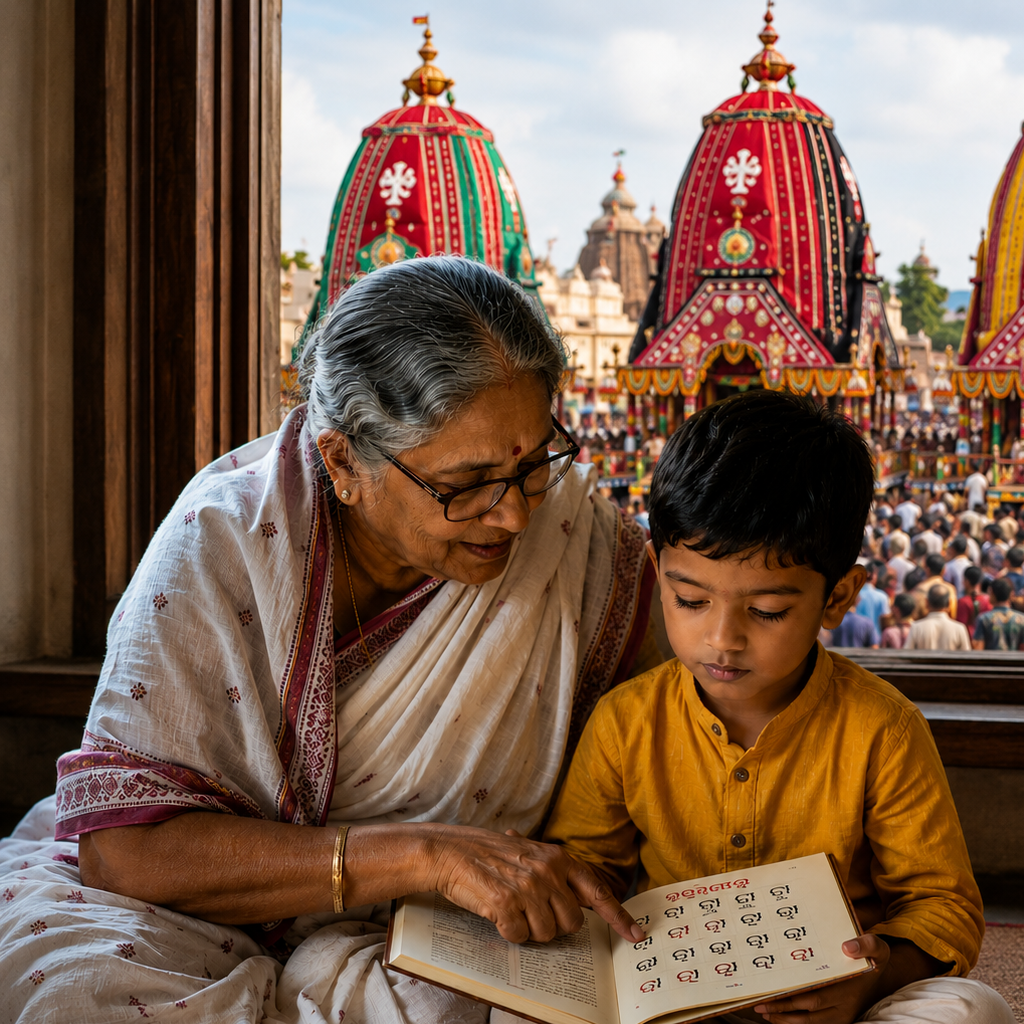
The Language That Created Odisha
The map of Odisha that we know today did not appear by accident.
It was built through a long struggle.
Before 1936, Odia-speaking people were scattered across different administrative regions. There was a growing fear that the Odia language and identity could gradually be absorbed by larger linguistic groups.
What followed was a remarkable movement led by visionaries such as Madhusudan Das, Fakir Mohan Senapati, Gopabandhu Das and countless others who believed that a people could not preserve their identity if they lost their language.
Their efforts eventually led to the creation of Odisha on 1 April 1936, making it the first state in India formed primarily on a linguistic basis.
Think about that for a moment.
Odisha was not created because of geography.
It was not created because of religion.
It was not created because of political convenience.
It was created because people believed the Odia language was worth protecting.
Nearly ninety years later, Odisha faces a very different challenge.
No external force is threatening the Odia language.
The challenge, if any, comes from within.
Most of us reading this article may have studied in English-medium schools.
There is nothing wrong with that.
English has helped generations of Odias pursue higher education, build careers and compete in a global economy. Every parent wants their children to have access to the best opportunities available.
The issue is not that our children are learning English.
The issue is that many are slowly losing touch with Odia.
Across Odisha, it is becoming increasingly common to see children speaking only in English or Hindi at home, in public places and even among family members. Some parents proudly encourage this behaviour, believing it reflects modernity, status or educational success.
Ironically, in the state that was created to protect the Odia language, Odia is often treated as an afterthought.
Many young people can confidently communicate in English and Hindi but struggle to read an Odia newspaper, write a letter in Odia or understand the richness of Odia literature.
A language rarely disappears overnight.
It fades gradually when people stop using it.
When parents stop speaking it at home.
When children stop reading it.
When society begins to view it as less valuable than other languages.
This is not an argument against English.
A young Odia should learn English.
A young Odia should learn Hindi.
A young Odia should learn any language that helps them grow.
But a young Odia should never have to abandon Odia in the process.
The world respects people who are confident in their roots.
The Japanese did not become successful by abandoning Japanese.
The Germans did not abandon German.
The French did not abandon French.
Progress and cultural identity can coexist.
The real question is not whether our children can speak English.
The real question is whether future generations will still be able to understand the language that helped create Odisha itself.
A state can survive without many things.
But it cannot remain culturally strong if it loses the very language that gave it an identity.
The responsibility does not belong only to governments or schools.
It belongs to every Odia household.
Because the future of a language is not decided in government offices.
It is decided around dining tables, in living rooms and in everyday conversations between parents and children.
The movement to create Odisha began with a determination to protect the Odia language.
The question before us today is simple.
Are we protecting it with the same determination?
