Author: Jyodha Editorial Team

  • The Boy Who Played With Sand And Made Odisha Proud

    The Boy Who Played With Sand And Made Odisha Proud

    The Boy Who Played With Sand And Made Odisha Proud

    Every child dreams.

    Some dream of becoming doctors.

    Some dream of becoming engineers.

    Some dream of becoming civil servants, entrepreneurs or sportspersons.

    But imagine telling people that your dream is to build a career using sand.

    Most would probably laugh.

    That is exactly why the story of Sudarsan Pattnaik deserves to be told.

    Born in Puri, Sudarsan Pattnaik did not come from privilege or wealth. Like countless families across Odisha, his family faced financial hardships and limited opportunities.

    Yet he possessed something that often matters more than resources.

    He had a dream.

    As a young boy growing up near the beaches of Puri, he was fascinated by sand. While others saw ordinary grains washed by the sea, he saw possibilities.

    He began creating sculptures using nothing more than his imagination, patience and determination.

    At a time when sand art was neither a recognized profession nor a respected career option, very few people could have imagined that a boy from Odisha would one day become one of the world’s most celebrated sand artists.

    The journey was not easy.

    Success rarely is.

    There were no ready-made roadmaps.

    No coaching centres.

    No established industry waiting to welcome him.

    There was only a belief that his passion was worth pursuing.

    Years of dedication transformed that passion into excellence.

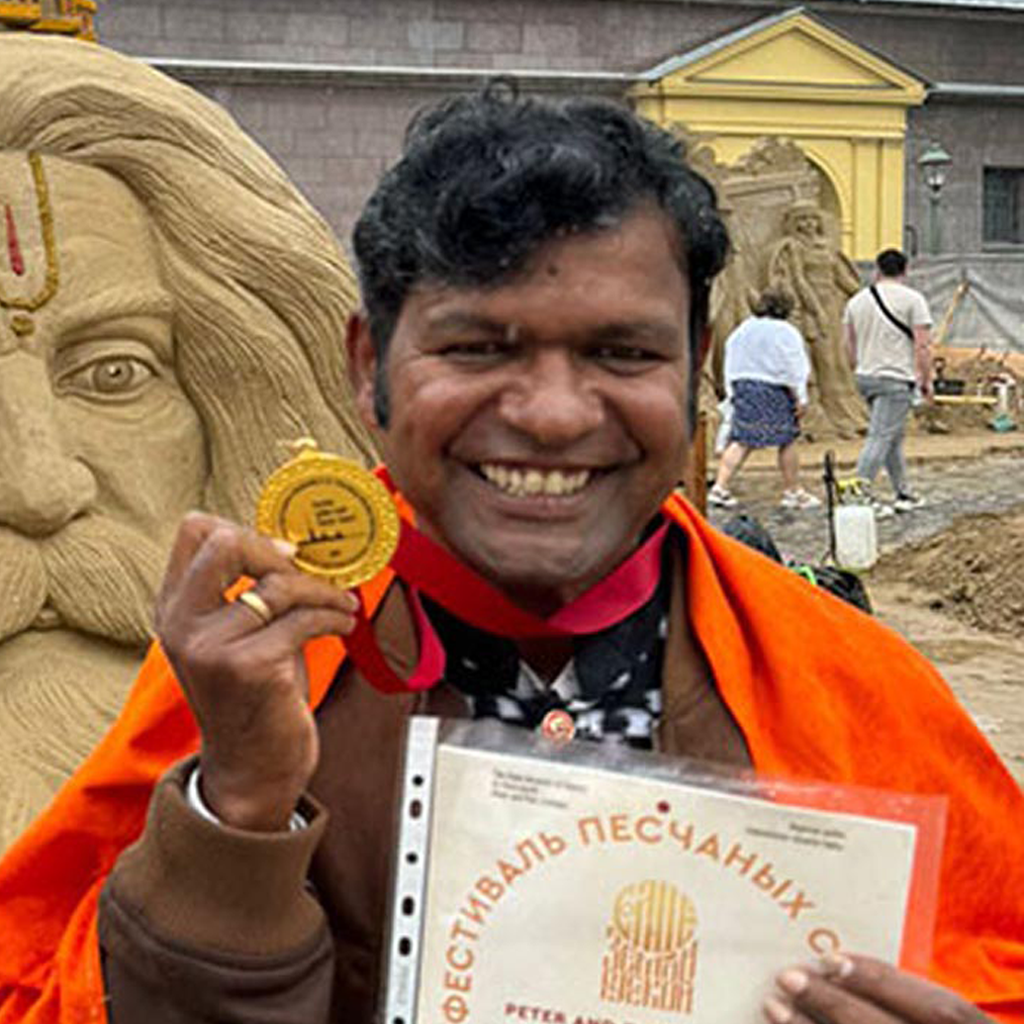
    Today, Sudarsan Pattnaik is known across the world for his extraordinary sand sculptures. His artwork has represented India and Odisha on international platforms and earned global recognition.

    Yet perhaps his greatest achievement is not the awards he has received.

    It is the message his journey sends to millions of young people.

    In a society where success is often measured through a limited set of careers, Sudarsan Pattnaik proved that talent can create its own path.

    His story reminds us that innovation often begins when people dare to think differently.

    Every year, thousands of young Odias pursue conventional careers because they are considered safe and respectable.

    There is nothing wrong with that.

    But Odisha also needs artists, designers, creators, innovators, researchers, writers and dreamers.

    Progress does not come from people who follow every existing path.

    Progress also comes from those who create new ones.

    Sudarsan Pattnaik transformed a handful of sand into a global symbol of creativity.

    He showed the world that extraordinary achievements can emerge from the most ordinary beginnings.

    For Odisha’s youth, that may be the most valuable lesson of all.

    You do not always need extraordinary resources to achieve extraordinary things.

    Sometimes, all you need is the courage to believe in a dream that others cannot yet see.

    A boy once played with sand on the beaches of Puri.

    Today, the world knows his name.

    And Odisha is proud to call him its own.
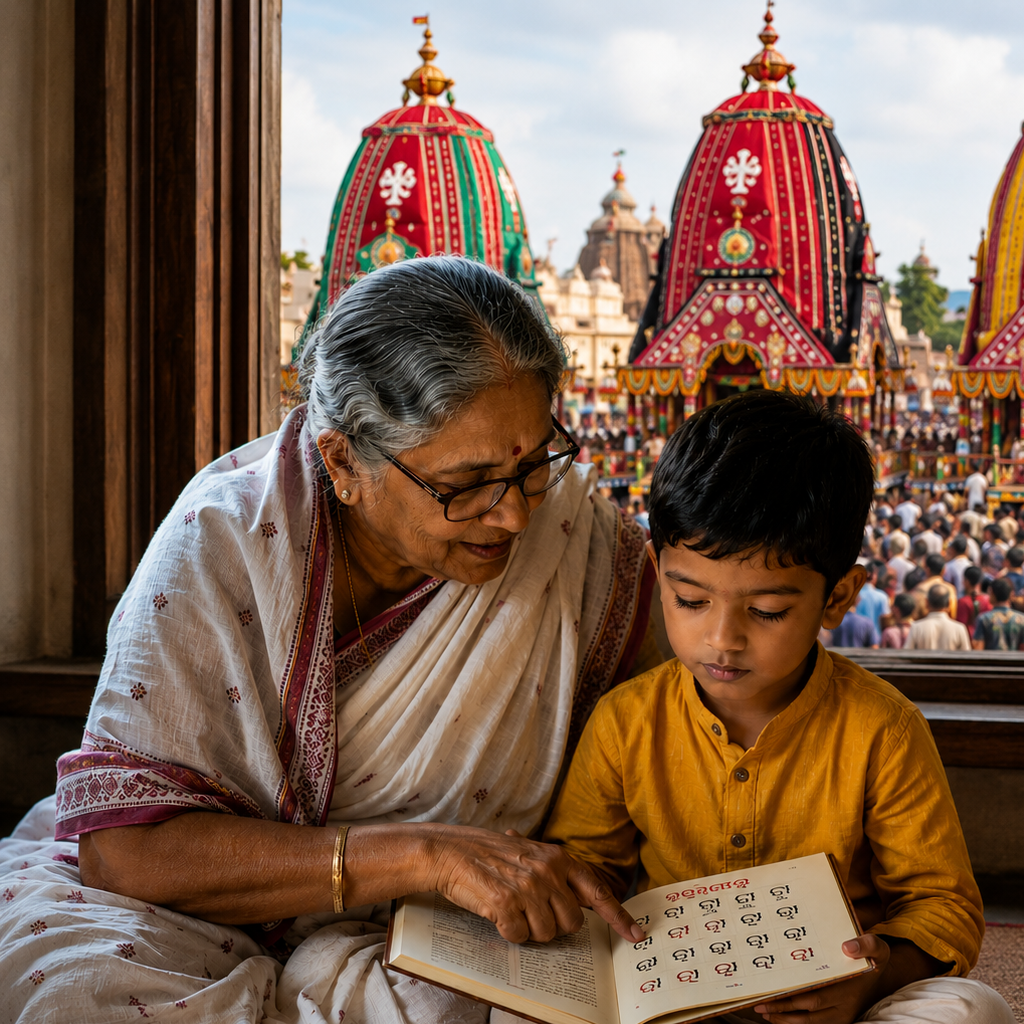
  • Odisha Was Created For The Odia Language. Are We Forgetting Why?

    Odisha Was Created For The Odia Language. Are We Forgetting Why?

    The Language That Created Odisha

    The map of Odisha that we know today did not appear by accident.

    It was built through a long struggle.

    Before 1936, Odia-speaking people were scattered across different administrative regions. There was a growing fear that the Odia language and identity could gradually be absorbed by larger linguistic groups.

    What followed was a remarkable movement led by visionaries such as Madhusudan Das, Fakir Mohan Senapati, Gopabandhu Das and countless others who believed that a people could not preserve their identity if they lost their language.

    Their efforts eventually led to the creation of Odisha on 1 April 1936, making it the first state in India formed primarily on a linguistic basis.

    Think about that for a moment.

    Odisha was not created because of geography.

    It was not created because of religion.

    It was not created because of political convenience.

    It was created because people believed the Odia language was worth protecting.

    Nearly ninety years later, Odisha faces a very different challenge.

    No external force is threatening the Odia language.

    The challenge, if any, comes from within.

    Most of us reading this article may have studied in English-medium schools.

    There is nothing wrong with that.

    English has helped generations of Odias pursue higher education, build careers and compete in a global economy. Every parent wants their children to have access to the best opportunities available.

    The issue is not that our children are learning English.

    The issue is that many are slowly losing touch with Odia.

    Across Odisha, it is becoming increasingly common to see children speaking only in English or Hindi at home, in public places and even among family members. Some parents proudly encourage this behaviour, believing it reflects modernity, status or educational success.

    Ironically, in the state that was created to protect the Odia language, Odia is often treated as an afterthought.

    Many young people can confidently communicate in English and Hindi but struggle to read an Odia newspaper, write a letter in Odia or understand the richness of Odia literature.

    A language rarely disappears overnight.

    It fades gradually when people stop using it.

    When parents stop speaking it at home.

    When children stop reading it.

    When society begins to view it as less valuable than other languages.

    This is not an argument against English.

    A young Odia should learn English.

    A young Odia should learn Hindi.

    A young Odia should learn any language that helps them grow.

    But a young Odia should never have to abandon Odia in the process.

    The world respects people who are confident in their roots.

    The Japanese did not become successful by abandoning Japanese.

    The Germans did not abandon German.

    The French did not abandon French.

    Progress and cultural identity can coexist.

    The real question is not whether our children can speak English.

    The real question is whether future generations will still be able to understand the language that helped create Odisha itself.

    A state can survive without many things.

    But it cannot remain culturally strong if it loses the very language that gave it an identity.

    The responsibility does not belong only to governments or schools.

    It belongs to every Odia household.

    Because the future of a language is not decided in government offices.

    It is decided around dining tables, in living rooms and in everyday conversations between parents and children.

    The movement to create Odisha began with a determination to protect the Odia language.

    The question before us today is simple.

    Are we protecting it with the same determination?

  • What Does It Say About Society When We Become Cruel To The Voiceless?

    What Does It Say About Society When We Become Cruel To The Voiceless?

    What Does It Say About Society When We Become Cruel To The Voiceless?

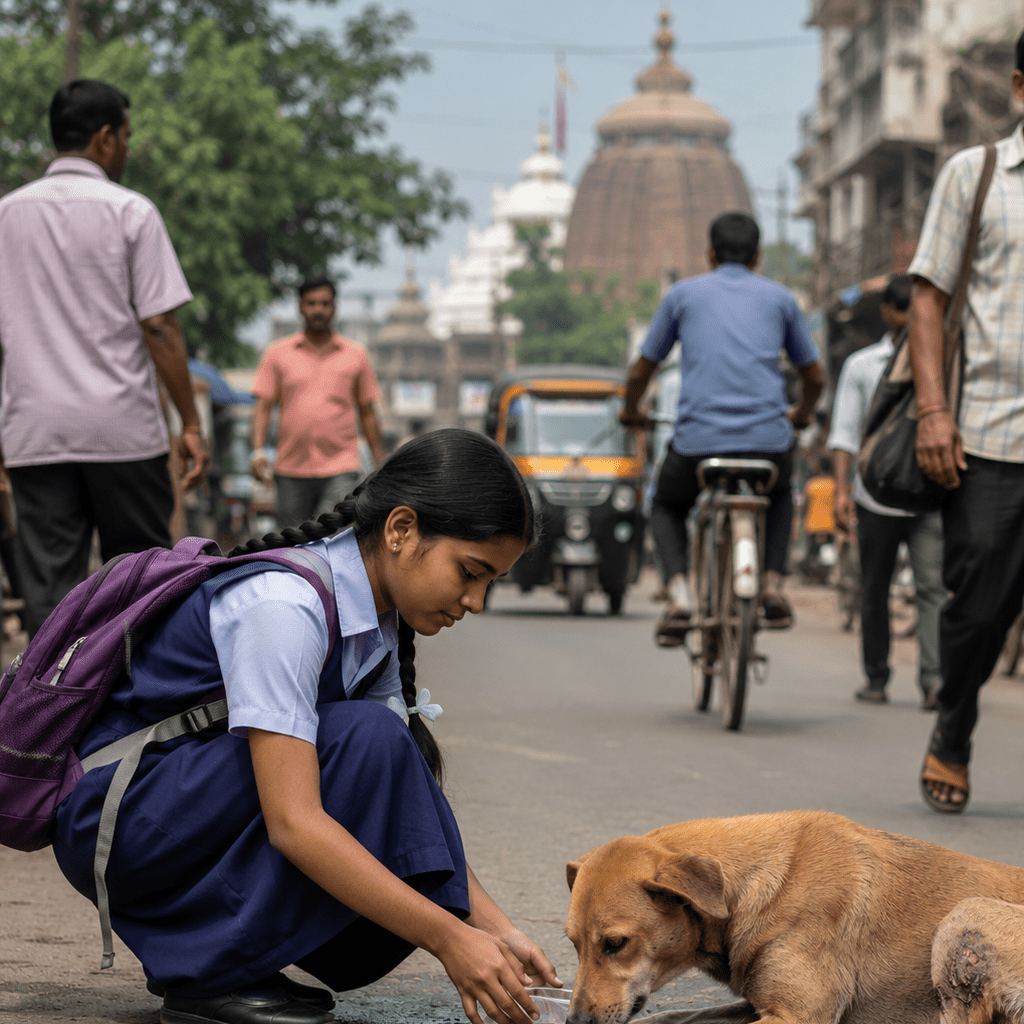
    Take a walk through any town or city in Odisha today and you may notice something troubling.

    Stray dogs being kicked away.

    Animals being beaten for entering a market.

    Injured cattle left unattended on roads.

    Birds trapped in plastic waste.

    Many people simply walk past these scenes without a second thought.

    Perhaps the most worrying part is that such incidents no longer shock us as much as they should.

    A society is often judged by how it treats its most vulnerable members.

    That principle applies not only to people but also to animals that cannot speak, complain or defend themselves.

    The way we treat the voiceless says a great deal about who we are.

    For generations, Odisha’s villages and towns shared a close relationship with animals. Cattle were part of households. Stray dogs were often fed by neighbourhoods. Birds, animals and humans coexisted as part of everyday life.

    Things seem to be changing.

    Urbanisation, busy lifestyles and growing individualism have made many people less patient and less compassionate. In some cases, cruelty is even recorded and shared on social media as entertainment.

    This should concern all of us.

    Cruelty towards animals is rarely just about animals.

    It reflects a gradual erosion of empathy.

    When people stop caring about suffering they can see, it becomes easier to ignore suffering they cannot.

    Compassion is not weakness.

    It is one of the foundations of a civilized society.

    Teaching children to be kind to animals teaches them responsibility, empathy and respect for life itself.

    Likewise, normalising cruelty teaches entirely different lessons.

    No society becomes more developed by becoming less humane.

    Better roads, bigger buildings and faster economic growth are important. But development also requires values.

    A truly progressive Odisha must be known not only for its achievements but also for its compassion.

    The next time we encounter an injured animal, an abandoned puppy or a hungry stray, we should ask ourselves a simple question.

    What kind of society are we helping to create?

    One that ignores suffering?

    Or one that chooses kindness when kindness costs very little?

    The answer will shape far more than the lives of animals.

    It will shape the character of our society itself.

  • Odisha Needs More Job Creators Than Job Seekers

    Odisha Needs More Job Creators Than Job Seekers

    Ask any engineering graduate, MBA, MCA, M.Tech or even PhD holder what they are doing after completing their studies.

    A surprisingly large number will say they are preparing for examinations such as UPSC, OPSC, SSC CGL, Banking, Railways, OSSC, ASO, RI, Amin or various other government recruitment examinations.

    There is nothing wrong with aspiring for public service. Government jobs play an important role in society and many talented individuals genuinely wish to serve the nation through these roles.

    But a question often goes unasked.

    Can a state build its future if the overwhelming majority of its educated youth are preparing to seek jobs rather than create them?

    For decades, we have taught young people how to search for opportunities. Very few are taught how to create them.

    Parents celebrate when their children secure a government job. Society respects those who receive a stable salary. There is nothing wrong with that.

    But who creates the jobs that everyone is competing for?

    Every company, factory, startup, training centre, software firm, manufacturing unit and service business was once started by someone who decided to take a risk.

    Without entrepreneurs, there would be no jobs to apply for.

    Odisha today faces a strange situation. Thousands of educated youth enter the job market every year while opportunities struggle to keep pace. As competition increases, frustration also increases.

    The solution cannot be to simply produce more job seekers.

    We must also produce job creators.

    A young entrepreneur who builds a successful enterprise may employ ten people. Another may employ fifty. Some may eventually employ hundreds.

    One entrepreneur can create opportunities for many families.

    Unfortunately, entrepreneurship is still treated as a backup option. Many people are encouraged to start a business only after exhausting every other employment opportunity.

    That mindset must change.

    Entrepreneurship should be viewed as a respectable and valuable career path in its own right.

    If Odisha truly wants to reduce unemployment, retain talent and build a stronger economy, it must create an environment where young people are encouraged to innovate, experiment and build enterprises.

    The future of Odisha cannot depend only on how many jobs are available.

    It must also depend on how many people are willing to create them.

    A society that produces only job seekers will always compete for opportunities.

    A society that produces job creators will create opportunities.

  • Odisha Doesn’t Need More Smart Cities. It Needs Smart Panchayats.

    Odisha Doesn’t Need More Smart Cities. It Needs Smart Panchayats.

    Every election, we hear about smart cities, world-class infrastructure, modern townships and urban transformation.

    But let us ask a simple question.

    How many villages in Odisha have proper drinking water, reliable internet, functional healthcare facilities and quality schools within easy reach?

    The truth is that Odisha’s future will not be decided in Bhubaneswar alone.

    It will be decided in thousands of villages that continue to lose their youth every year.

    A young person leaves the village because there are no opportunities.

    A family moves because education and healthcare are concentrated elsewhere.

    A farmer struggles because market access remains limited.

    And then we celebrate urban growth while quietly accepting rural decline.

    This is not development.

    This is migration disguised as development.

    For decades, governments have invested heavily in cities while expecting villages to survive on schemes and subsidies. The result is visible across Odisha. Villages are losing their most productive population while urban centres are struggling to absorb the pressure.

    What Odisha needs is not merely more smart cities.

    It needs smart panchayats.

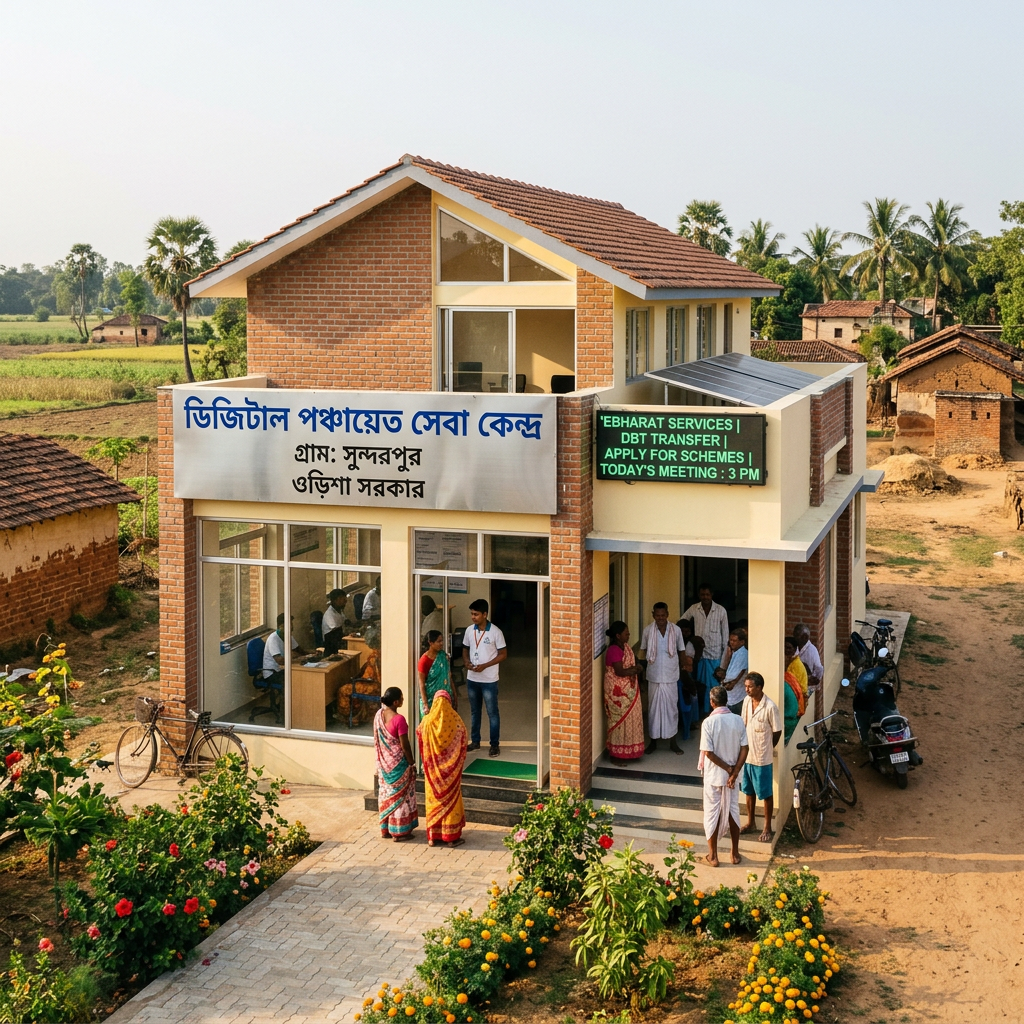
    Every panchayat should have high-speed internet, digital public services, quality schools, skill development centres, primary healthcare facilities, public libraries and spaces for entrepreneurship.

    Why should a student travel hundreds of kilometres for opportunities that technology can bring closer to home?

    Why should a young entrepreneur be forced to leave the village simply because the ecosystem does not exist there?

    Why should development always mean moving away?

    If every panchayat becomes a centre of education, innovation, skill development and local enterprise, migration will become a choice rather than a necessity.

    The real measure of development is not how many people move to cities.

    It is how many people can build a dignified future without being forced to leave their communities.

    Odisha has more than enough talent.

    The question is whether we have the vision to develop every corner of the state instead of concentrating everything in a few urban pockets.

    Perhaps the next debate should not be about building another smart city.

    Perhaps it should be about creating a thousand smart panchayats.