
Tag: Youth

  • Odisha Was Created For The Odia Language. Are We Forgetting Why?

    Odisha Was Created For The Odia Language. Are We Forgetting Why?

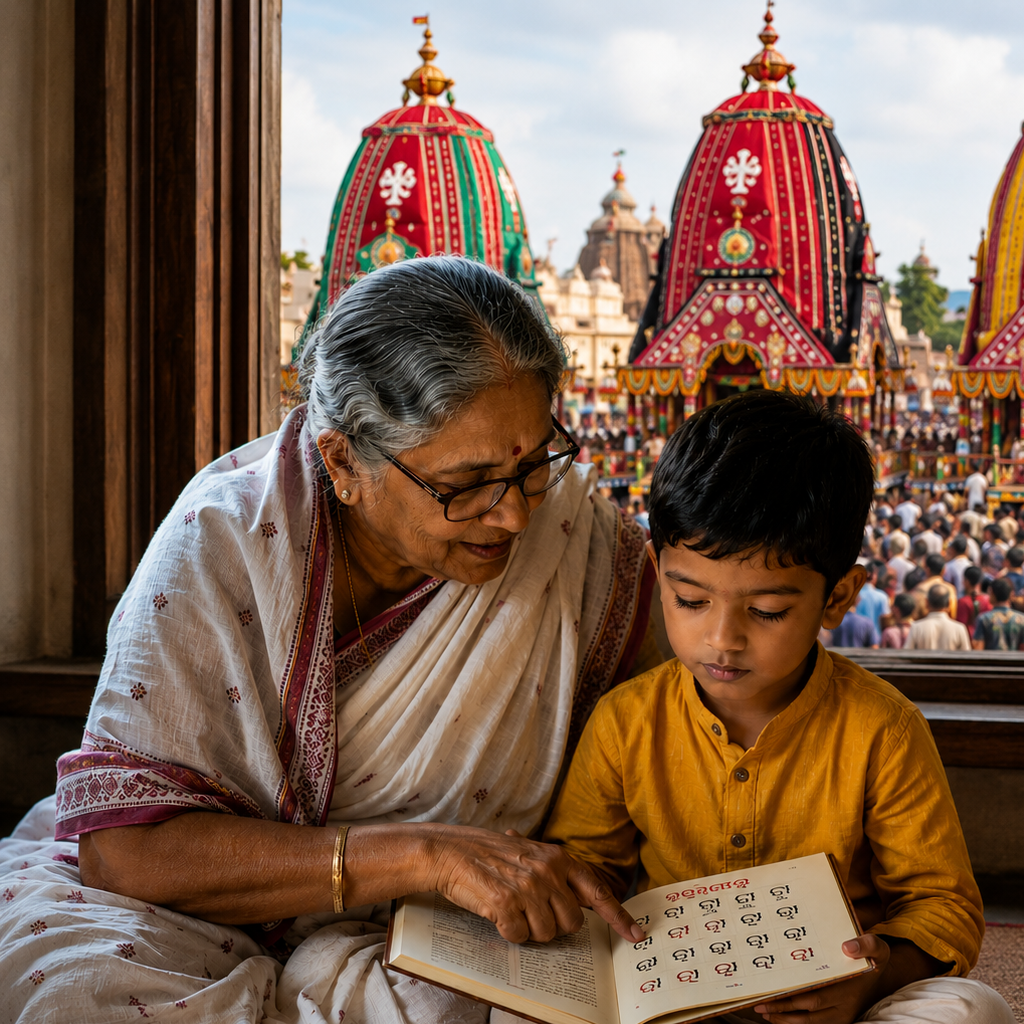
    The Language That Created Odisha

    The map of Odisha that we know today did not appear by accident.

    It was built through a long struggle.

    Before 1936, Odia-speaking people were scattered across different administrative regions. There was a growing fear that the Odia language and identity could gradually be absorbed by larger linguistic groups.

    What followed was a remarkable movement led by visionaries such as Madhusudan Das, Fakir Mohan Senapati, Gopabandhu Das and countless others who believed that a people could not preserve their identity if they lost their language.

    Their efforts eventually led to the creation of Odisha on 1 April 1936, making it the first state in India formed primarily on a linguistic basis.

    Think about that for a moment.

    Odisha was not created because of geography.

    It was not created because of religion.

    It was not created because of political convenience.

    It was created because people believed the Odia language was worth protecting.

    Nearly ninety years later, Odisha faces a very different challenge.

    No external force is threatening the Odia language.

    The challenge, if any, comes from within.

    Most of us reading this article may have studied in English-medium schools.

    There is nothing wrong with that.

    English has helped generations of Odias pursue higher education, build careers and compete in a global economy. Every parent wants their children to have access to the best opportunities available.

    The issue is not that our children are learning English.

    The issue is that many are slowly losing touch with Odia.

    Across Odisha, it is becoming increasingly common to see children speaking only in English or Hindi at home, in public places and even among family members. Some parents proudly encourage this behaviour, believing it reflects modernity, status or educational success.

    Ironically, in the state that was created to protect the Odia language, Odia is often treated as an afterthought.

    Many young people can confidently communicate in English and Hindi but struggle to read an Odia newspaper, write a letter in Odia or understand the richness of Odia literature.

    A language rarely disappears overnight.

    It fades gradually when people stop using it.

    When parents stop speaking it at home.

    When children stop reading it.

    When society begins to view it as less valuable than other languages.

    This is not an argument against English.

    A young Odia should learn English.

    A young Odia should learn Hindi.

    A young Odia should learn any language that helps them grow.

    But a young Odia should never have to abandon Odia in the process.

    The world respects people who are confident in their roots.

    The Japanese did not become successful by abandoning Japanese.

    The Germans did not abandon German.

    The French did not abandon French.

    Progress and cultural identity can coexist.

    The real question is not whether our children can speak English.

    The real question is whether future generations will still be able to understand the language that helped create Odisha itself.

    A state can survive without many things.

    But it cannot remain culturally strong if it loses the very language that gave it an identity.

    The responsibility does not belong only to governments or schools.

    It belongs to every Odia household.

    Because the future of a language is not decided in government offices.

    It is decided around dining tables, in living rooms and in everyday conversations between parents and children.

    The movement to create Odisha began with a determination to protect the Odia language.

    The question before us today is simple.

    Are we protecting it with the same determination?
  • When Trust Becomes Fear: The Growing Crisis of Women’s Safety

    When Trust Becomes Fear: The Growing Crisis of Women’s Safety

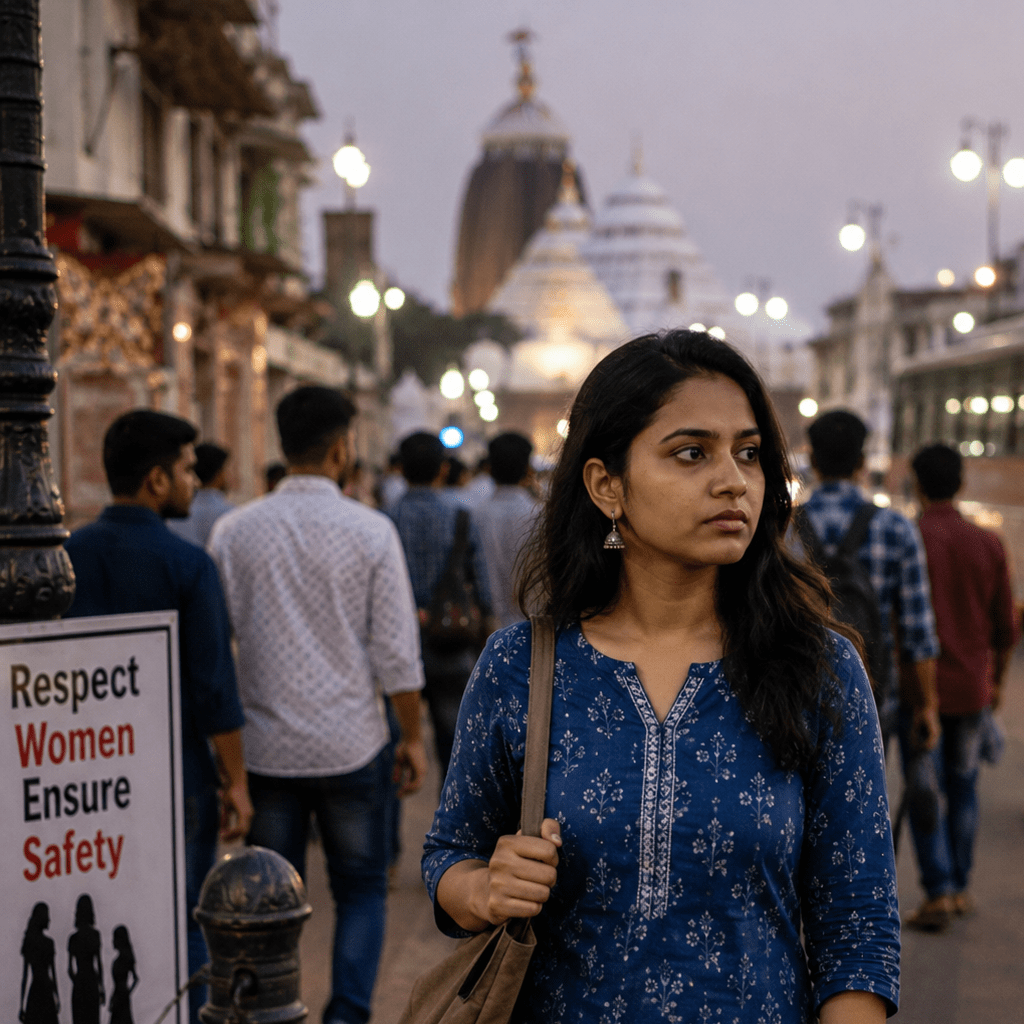
    Why Are Women No Longer Safe Even Among People They Trust?

    Women’s safety has become one of the most important social issues of our time.

    Every few weeks, Odisha and the rest of the country are shaken by reports of women being harassed, assaulted or subjected to violence. Public outrage follows. Debates take place on television and social media. Strong statements are made. Yet the incidents continue.

    The most disturbing aspect of this growing crisis is that many women are no longer afraid only of strangers.

    Increasingly, the people accused of committing such acts are individuals known to the victim. Friends, classmates, colleagues, neighbours, relatives and acquaintances frequently appear in police reports and news headlines.

    This raises a difficult question.

    How did society reach a point where trust itself is becoming a source of fear?

    For generations, families taught their daughters to be cautious around unknown people. Today, many parents worry not only about public spaces but also about schools, colleges, workplaces, coaching centres and social circles where trust once came naturally.

    Women’s safety is often discussed as a law-and-order issue. While effective policing and speedy justice are essential, the problem runs much deeper.

    A society does not suddenly become unsafe.

    It becomes unsafe when respect is replaced by entitlement.

    It becomes unsafe when harassment is dismissed as harmless behaviour.

    It becomes unsafe when victims are questioned more than perpetrators.

    It becomes unsafe when bystanders choose silence over intervention.

    Most importantly, it becomes unsafe when young people grow up without learning the value of dignity, empathy and personal responsibility.

    The issue is not only about crime.

    It is also about culture.

    Every family, educational institution and workplace has a role to play in shaping attitudes towards women. Respect cannot be enforced only through laws. It must become a social value that is consistently practised and defended.

    Technology has connected people more than ever before, yet many observers believe that empathy and social responsibility are declining. Online abuse, public humiliation and the normalisation of toxic behaviour have become common experiences for many women.

    This should concern everyone.

    A society where women constantly have to calculate risks before travelling, studying, working or participating in public life is not a truly progressive society.

    Development cannot be measured only through roads, buildings, industries or economic growth.

    The true measure of progress lies in whether people feel safe, respected and valued.

    Women should not have to alter their ambitions, opportunities or freedom because society has failed to provide basic safety and dignity.

    The responsibility for change cannot rest solely on women.

    It belongs to families.

    It belongs to educational institutions.

    It belongs to communities.

    It belongs to men.

    And it belongs to society as a whole.

    The question Odisha must ask itself is not whether enough statements are being made after every incident.

    The question is whether we are building a culture where such incidents become increasingly rare.

    A developed society is not one where women learn to live with fear.

    It is one where fear has no reason to exist.

  • Odisha Needs More Job Creators Than Job Seekers

    Odisha Needs More Job Creators Than Job Seekers

    Ask any engineering graduate, MBA, MCA, M.Tech or even PhD holder what they are doing after completing their studies.

    A surprisingly large number will say they are preparing for examinations such as UPSC, OPSC, SSC CGL, Banking, Railways, OSSC, ASO, RI, Amin or various other government recruitment examinations.

    There is nothing wrong with aspiring for public service. Government jobs play an important role in society and many talented individuals genuinely wish to serve the nation through these roles.

    But a question often goes unasked.

    Can a state build its future if the overwhelming majority of its educated youth are preparing to seek jobs rather than create them?

    For decades, we have taught young people how to search for opportunities. Very few are taught how to create them.

    Parents celebrate when their children secure a government job. Society respects those who receive a stable salary. There is nothing wrong with that.

    But who creates the jobs that everyone is competing for?

    Every company, factory, startup, training centre, software firm, manufacturing unit and service business was once started by someone who decided to take a risk.

    Without entrepreneurs, there would be no jobs to apply for.

    Odisha today faces a strange situation. Thousands of educated youth enter the job market every year while opportunities struggle to keep pace. As competition increases, frustration also increases.

    The solution cannot be to simply produce more job seekers.

    We must also produce job creators.

    A young entrepreneur who builds a successful enterprise may employ ten people. Another may employ fifty. Some may eventually employ hundreds.

    One entrepreneur can create opportunities for many families.

    Unfortunately, entrepreneurship is still treated as a backup option. Many people are encouraged to start a business only after exhausting every other employment opportunity.

    That mindset must change.

    Entrepreneurship should be viewed as a respectable and valuable career path in its own right.

    If Odisha truly wants to reduce unemployment, retain talent and build a stronger economy, it must create an environment where young people are encouraged to innovate, experiment and build enterprises.

    The future of Odisha cannot depend only on how many jobs are available.

    It must also depend on how many people are willing to create them.

    A society that produces only job seekers will always compete for opportunities.

    A society that produces job creators will create opportunities.