Tag: Social Responsibility

  • What Does It Say About Society When We Become Cruel To The Voiceless?

    What Does It Say About Society When We Become Cruel To The Voiceless?

    What Does It Say About Society When We Become Cruel To The Voiceless?

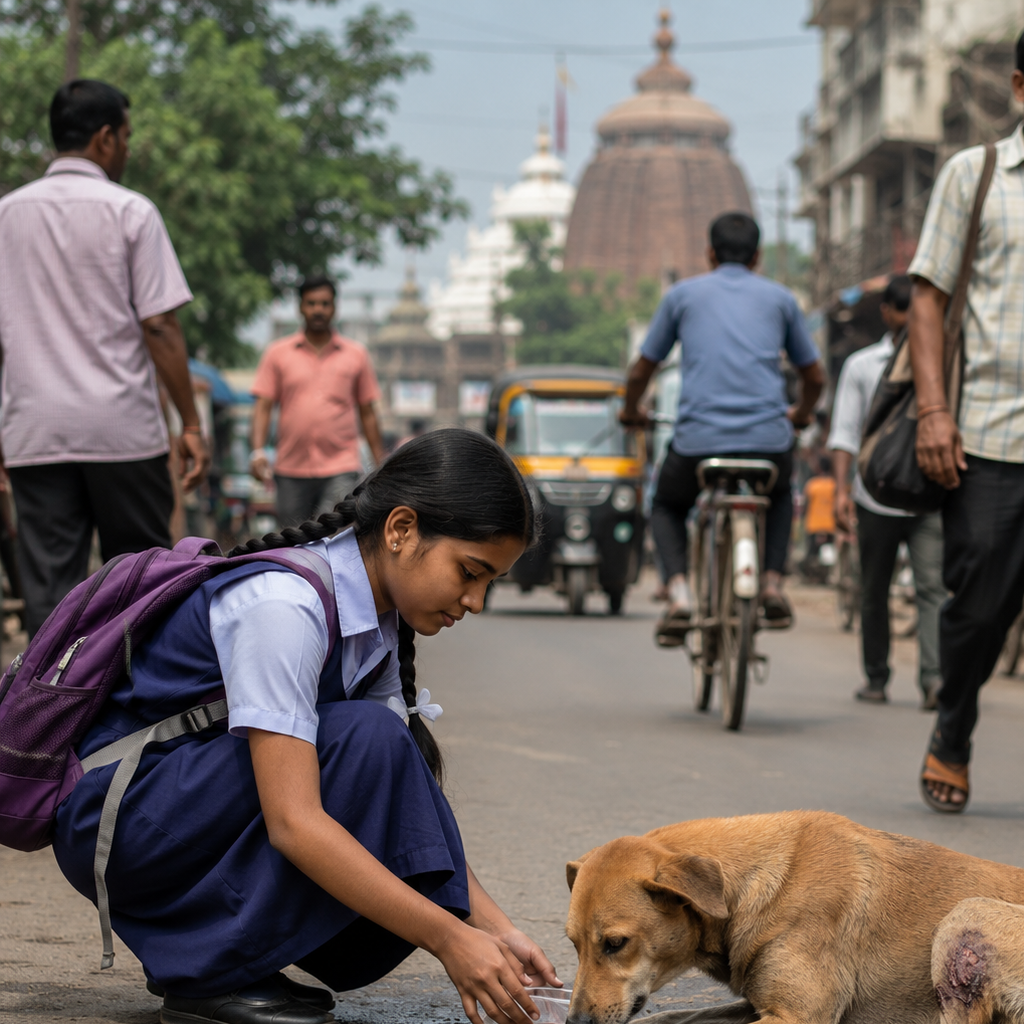
    Take a walk through any town or city in Odisha today and you may notice something troubling.

    Stray dogs being kicked away.

    Animals being beaten for entering a market.

    Injured cattle left unattended on roads.

    Birds trapped in plastic waste.

    Many people simply walk past these scenes without a second thought.

    Perhaps the most worrying part is that such incidents no longer shock us as much as they should.

    A society is often judged by how it treats its most vulnerable members.

    That principle applies not only to people but also to animals that cannot speak, complain or defend themselves.

    The way we treat the voiceless says a great deal about who we are.

    For generations, Odisha’s villages and towns shared a close relationship with animals. Cattle were part of households. Stray dogs were often fed by neighbourhoods. Birds, animals and humans coexisted as part of everyday life.

    Things seem to be changing.

    Urbanisation, busy lifestyles and growing individualism have made many people less patient and less compassionate. In some cases, cruelty is even recorded and shared on social media as entertainment.

    This should concern all of us.

    Cruelty towards animals is rarely just about animals.

    It reflects a gradual erosion of empathy.

    When people stop caring about suffering they can see, it becomes easier to ignore suffering they cannot.

    Compassion is not weakness.

    It is one of the foundations of a civilized society.

    Teaching children to be kind to animals teaches them responsibility, empathy and respect for life itself.

    Likewise, normalising cruelty teaches entirely different lessons.

    No society becomes more developed by becoming less humane.

    Better roads, bigger buildings and faster economic growth are important. But development also requires values.

    A truly progressive Odisha must be known not only for its achievements but also for its compassion.

    The next time we encounter an injured animal, an abandoned puppy or a hungry stray, we should ask ourselves a simple question.

    What kind of society are we helping to create?

    One that ignores suffering?

    Or one that chooses kindness when kindness costs very little?

    The answer will shape far more than the lives of animals.

    It will shape the character of our society itself.
  • When Trust Becomes Fear: The Growing Crisis of Women’s Safety

    When Trust Becomes Fear: The Growing Crisis of Women’s Safety

    Why Are Women No Longer Safe Even Among People They Trust?

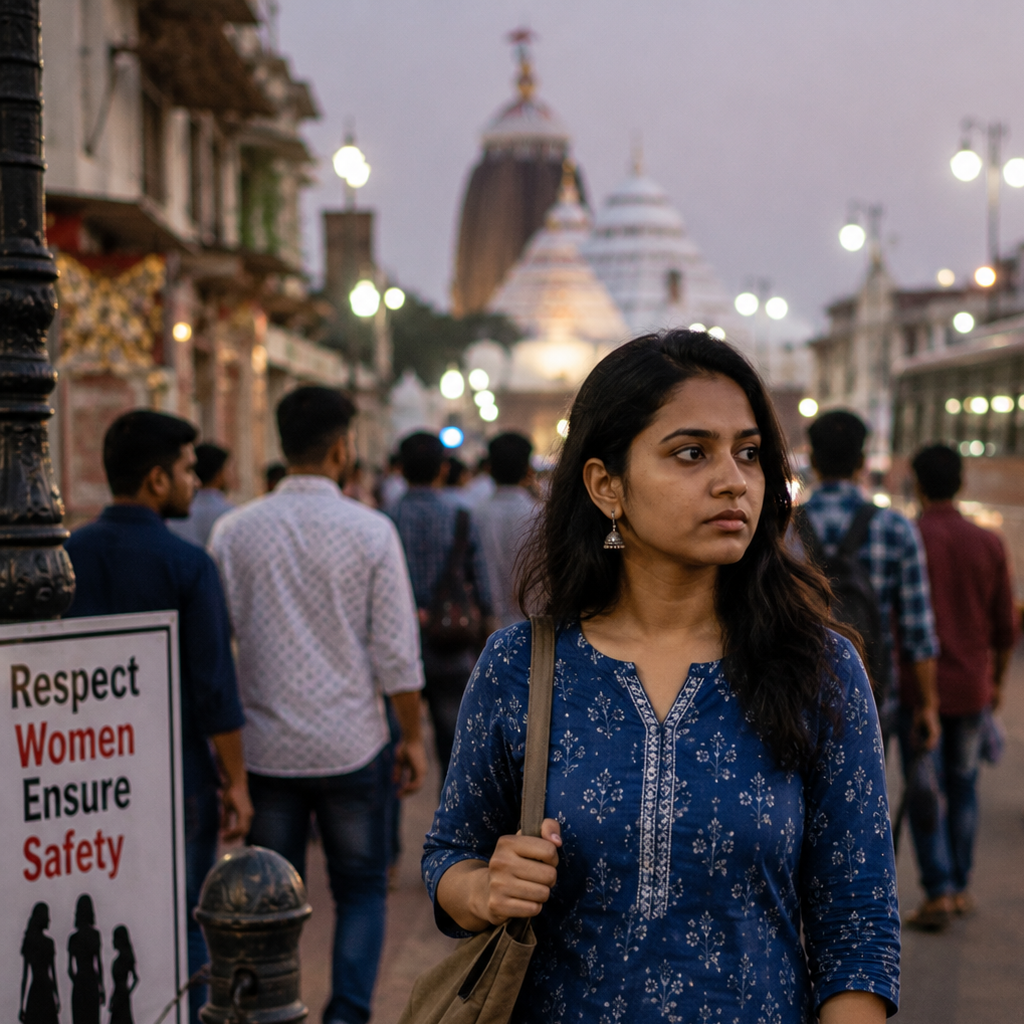
    Women’s safety has become one of the most important social issues of our time.

    Every few weeks, Odisha and the rest of the country are shaken by reports of women being harassed, assaulted or subjected to violence. Public outrage follows. Debates take place on television and social media. Strong statements are made. Yet the incidents continue.

    The most disturbing aspect of this growing crisis is that many women are no longer afraid only of strangers.

    Increasingly, the people accused of committing such acts are individuals known to the victim. Friends, classmates, colleagues, neighbours, relatives and acquaintances frequently appear in police reports and news headlines.

    This raises a difficult question.

    How did society reach a point where trust itself is becoming a source of fear?

    For generations, families taught their daughters to be cautious around unknown people. Today, many parents worry not only about public spaces but also about schools, colleges, workplaces, coaching centres and social circles where trust once came naturally.

    Women’s safety is often discussed as a law-and-order issue. While effective policing and speedy justice are essential, the problem runs much deeper.

    A society does not suddenly become unsafe.

    It becomes unsafe when respect is replaced by entitlement.

    It becomes unsafe when harassment is dismissed as harmless behaviour.

    It becomes unsafe when victims are questioned more than perpetrators.

    It becomes unsafe when bystanders choose silence over intervention.

    Most importantly, it becomes unsafe when young people grow up without learning the value of dignity, empathy and personal responsibility.

    The issue is not only about crime.

    It is also about culture.

    Every family, educational institution and workplace has a role to play in shaping attitudes towards women. Respect cannot be enforced only through laws. It must become a social value that is consistently practised and defended.

    Technology has connected people more than ever before, yet many observers believe that empathy and social responsibility are declining. Online abuse, public humiliation and the normalisation of toxic behaviour have become common experiences for many women.

    This should concern everyone.

    A society where women constantly have to calculate risks before travelling, studying, working or participating in public life is not a truly progressive society.

    Development cannot be measured only through roads, buildings, industries or economic growth.

    The true measure of progress lies in whether people feel safe, respected and valued.

    Women should not have to alter their ambitions, opportunities or freedom because society has failed to provide basic safety and dignity.

    The responsibility for change cannot rest solely on women.

    It belongs to families.

    It belongs to educational institutions.

    It belongs to communities.

    It belongs to men.

    And it belongs to society as a whole.

    The question Odisha must ask itself is not whether enough statements are being made after every incident.

    The question is whether we are building a culture where such incidents become increasingly rare.

    A developed society is not one where women learn to live with fear.

    It is one where fear has no reason to exist.